
Kitchen foundation · Rice
How to Cook Fluffy Japanese Rice in a Rice Cooker
Glossy, tender grains with just enough chew are the heart of a Japanese meal. The rice cooker does the heating; a few careful choices before and after the button press make the rice truly good.
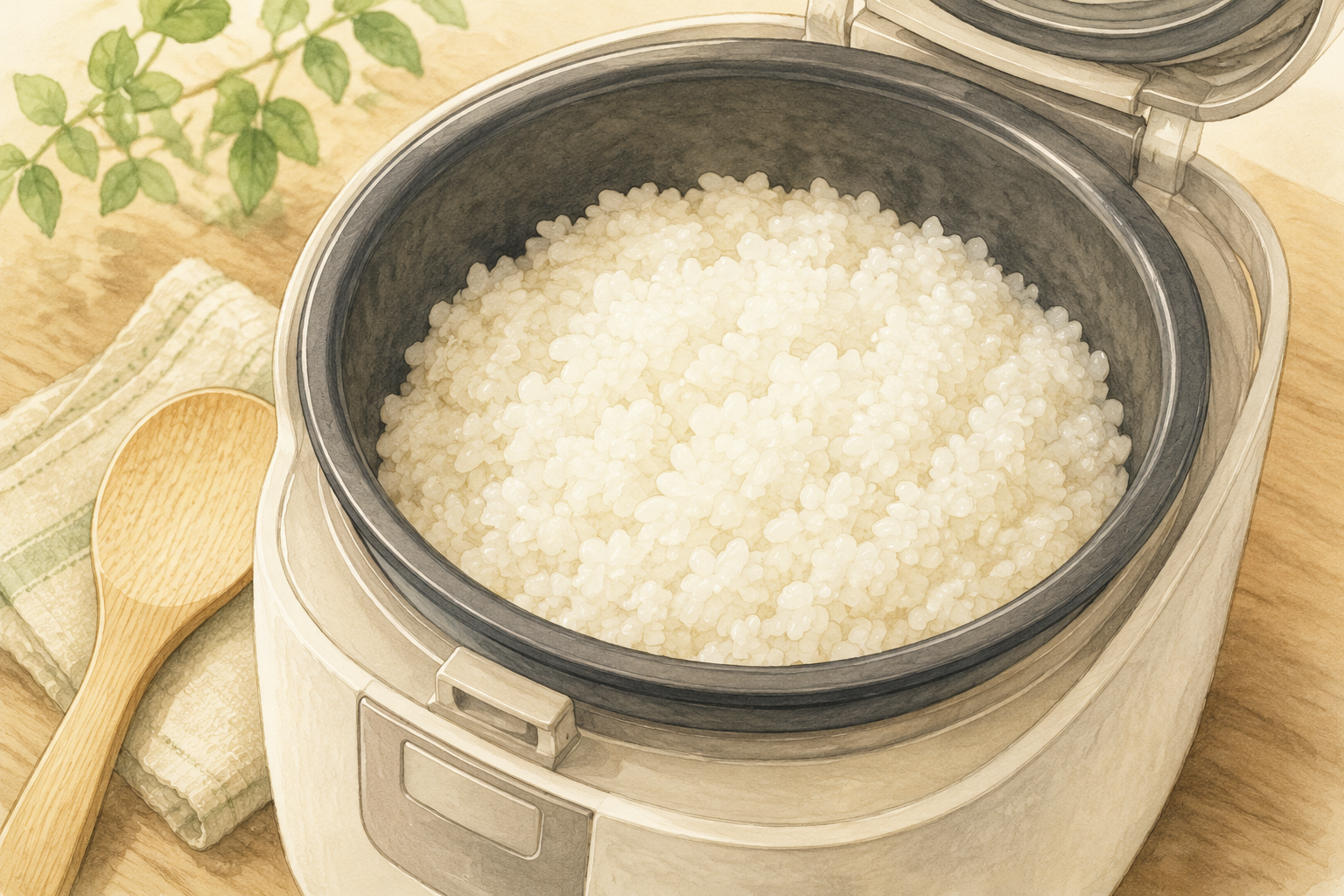
Rice cookers are wonderfully forgiving, but they cannot correct the wrong rice, a loose measurement, or a rushed finish. Use Japanese short-grain rice, measure with intention, and give the grains time to absorb water before and after cooking. The result is fluffy rice that holds together without becoming wet or heavy.
The dependable method
Seven steps to better rice
-
Choose the right rice
Japanese short-grain rice is ideal. I personally use a brand called Sekka (雪花) with good results, but there is no need to seek out one specific product: use any Japanese short-grain rice available locally. Medium-grain Calrose can work a little looser; jasmine, basmati, and Arborio will not give the same texture.
-
Measure before rinsing
Level two 180 ml rice-cooker cups of dry rice and add them to a bowl or the cooker insert. Measuring dry rice first keeps the cooker’s water markings accurate.
-
Rinse gently but promptly
Add plenty of cold water, stir once with your hand, and pour off the cloudy first water right away. Rinse two or three more times with gentle swirls. The water can remain faintly cloudy; scrubbing hard can break the grains.
-
Drain, measure, and soak
Drain well, transfer the rice to the cooker, and add fresh water to the “2” white-rice line. Without markings, use about 400 ml water. Let the rice soak for 20–30 minutes; in a cold, dry winter kitchen, 30–45 minutes is even better.
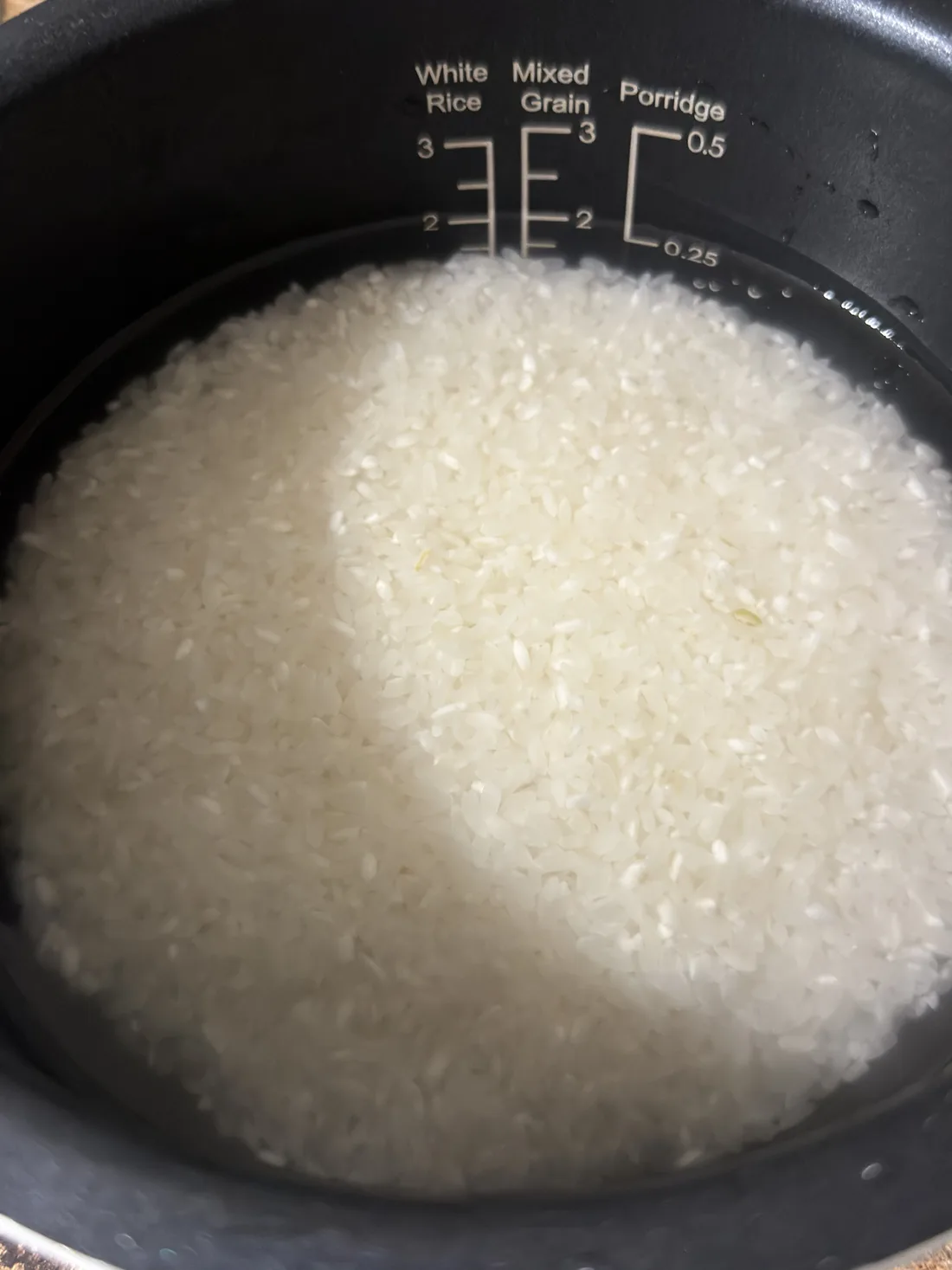
Rinsed rice measured with water before cooking -
Cook on the regular white-rice setting
Wipe the outside of the inner pot dry, set it into the cooker, close the lid, and start the standard white-rice cycle. Avoid the quick setting for your first batch; timing varies by model.
-
Rest with the lid closed
When the cycle ends, leave the cooker closed for 10 minutes. This short rest equalizes moisture from top to bottom and finishes the centre of each grain.
-
Fluff and release steam
Slide a rice paddle around the edge, cut down through the rice in quarters, and lift from the bottom with light folding motions. Do not mash. Serve promptly or close the lid on the warm setting once excess steam has escaped.
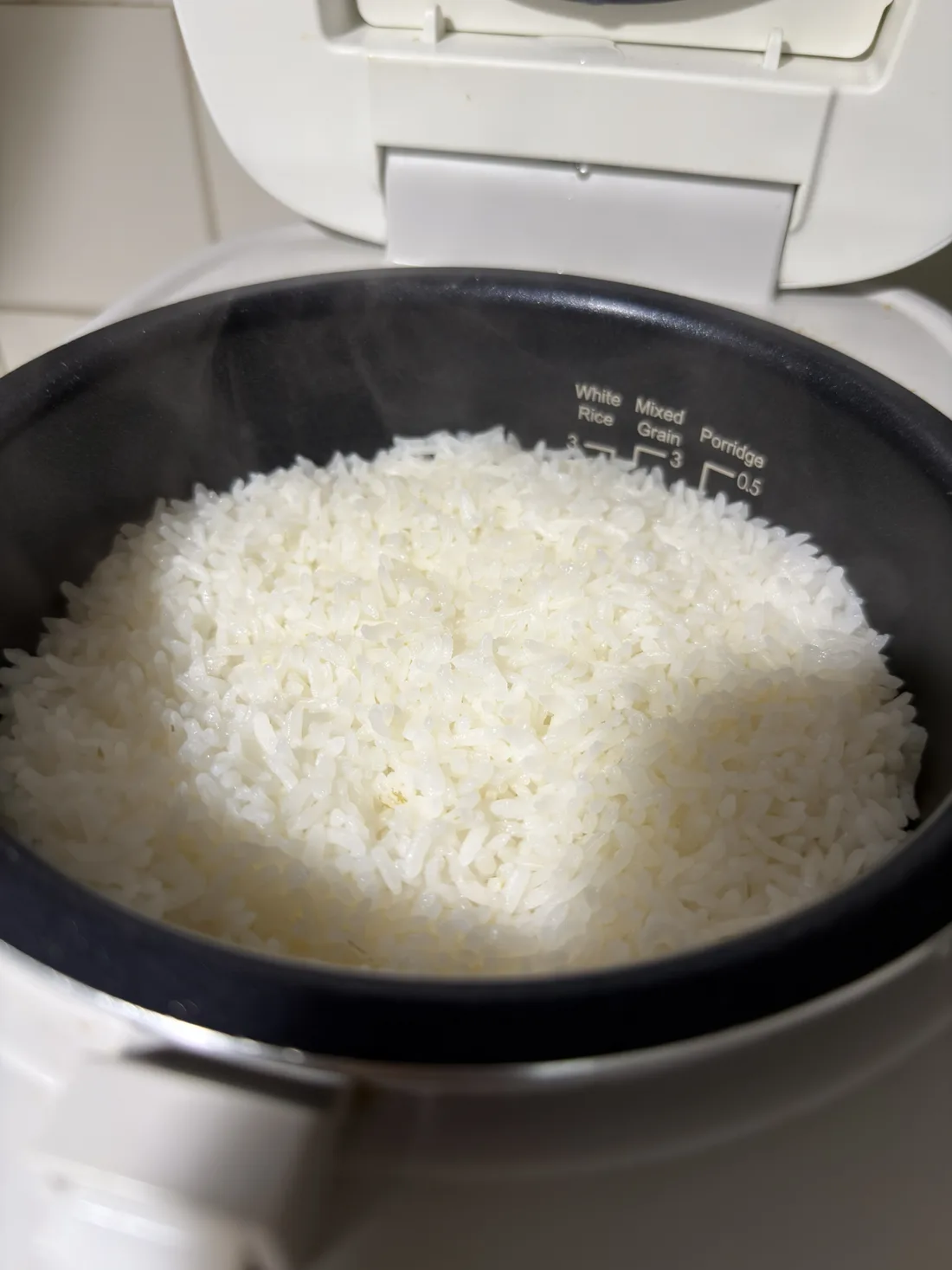
Cooked rice after resting, ready to fluff
The two variables
Rice choice and water
Short-grain means the right texture
Japanese short-grain rice has enough surface starch to cling lightly when cooked, so chopsticks can pick it up. Freshly opened rice usually needs a touch less water than older, drier rice. Keep the bag sealed in a cool cupboard and adjust only 1–2 tablespoons on your next batch if needed.
Trust the line, then learn your cooker
The inner-pot line accounts for the volume occupied by the rice, so fill only after the rinsed rice is in the pot. If you must use a ratio, start around 1 part dry rice to 1.1 parts water by volume after draining. Humidity, rice age, and cooker design all matter.
Troubleshooting
Common mistakes
Measuring before the rice drains
Water caught between rinsed grains adds to the total. Drain well, then fill to the line.
Skipping the soak or rest
These quiet intervals hydrate the centre and redistribute steam; rushing either can leave hard or wet patches.
Stirring instead of fluffing
Use vertical cuts and gentle lifts. Circular stirring crushes grains and makes the surface gummy.
Leaving it on warm all day
For best texture, eat within a few hours. Freeze individual portions while still fresh rather than refrigerating them.
Quick answers
Rice-cooker FAQ
Does the rinse water need to run completely clear?
No. Two or three gentle rinses are enough; slightly cloudy water is normal and helps preserve the rice’s character.
Can I skip soaking with a modern rice cooker?
Some fuzzy-logic models include soaking in their regular cycle. Check the manual. If yours does not, a separate 20–30 minute soak gives more even grains.
Can I use this method for brown rice?
Not directly. Brown rice needs more water and a longer cycle; use the cooker’s brown-rice setting and its matching water line.
What is the best way to keep leftover rice?
Wrap warm single portions and freeze them promptly. Reheat from frozen so the trapped steam restores the soft texture.
Put your rice to work
Make your rice the start of something good
Begin with comforting oyakodon today, with more everyday recipes to follow.
The Perfect Oyakodon
Tender chicken and softly set egg in a light savoury-sweet sauce over fresh rice.
Read recipeA new rice bowl
Another practical rice-bowl recipe will join the Shokutaku collection here.
A seasonal rice dish
This space is reserved for a future recipe built around the seasons.